

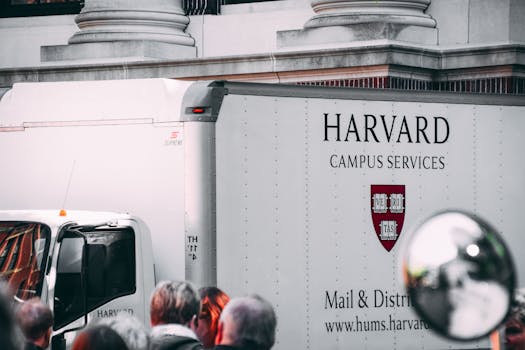
Harvard University has openly challenged the Trump administration by refusing to comply with federal demands concerning its hiring practices, admissions policies, and curriculum content. This act of defiance from one of the world’s oldest and wealthiest universities has triggered an immediate response from the White House, which announced a freeze on $2.2 billion in grants and a $60 million contract previously allocated to the institution.
The confrontation stems from the administration’s campaign targeting what it perceives as ideological bias, particularly a “woke” agenda, on American college campuses. Federal officials had pressed Harvard for significant concessions, including sharing hiring data, allowing external oversight to ensure “viewpoint diversity” within academic departments, modifying programs linked to alleged antisemitic harassment, and dismantling diversity, equity, and inclusion (DEI) initiatives. Some reports also mentioned demands to lift campus mask bans.
In a strongly worded letter, Harvard President Alan M. Garber asserted that the university would not permit governmental overreach into its affairs, positioning the conflict as a defense of institutional autonomy. This stance was lauded by figures like former President Barack Obama and former federal judge J. Michael Luttig, who described Harvard’s decision as potentially pivotal in resisting what they see as the administration’s overreach against American institutions. Wesleyan University President Michael S. Roth characterized it as a necessary pushback against bullying tactics.
However, the administration and its allies condemned Harvard’s position. A Department of Education task force focused on antisemitism criticized the university’s decision, suggesting it reflected an “entitlement mindset” and ignored the civil rights obligations tied to federal funding. Representative Elise Stefanik, a Harvard alumna, sharply criticized the university, calling for a complete cutoff of taxpayer funds.
The backdrop to this conflict includes heightened tensions on campuses nationwide following the October 7, 2023, Hamas-led attacks in Israel and subsequent protests related to the Gaza conflict. The Trump administration has increasingly focused on alleged antisemitism at universities, linking it to student protests and threatening funding cuts at several prominent institutions, including Columbia University, which recently agreed to some federal demands regarding oversight of certain academic departments.
The financial impact of the funding freeze on Harvard remains partially unclear, though the $2.26 billion represents a portion of the roughly $9 billion in federal funds the university system receives annually. A significant majority of this funding ($7 billion) supports affiliated hospitals like Massachusetts General and Dana-Farber Cancer Institute, while the remaining $2 billion directly funds university research across various critical fields.
Harvard, represented by lawyers William A. Burck and Robert K. Hur (both with prior connections to the Trump administration or its officials), maintains it is open to dialogue but will not yield to demands it deems unlawful.
This high-stakes battle between the federal government and the nation’s most prominent university is seen by observers as a fight the Trump administration, particularly advisor Stephen Miller, actively sought. It provides a platform to argue against perceived liberal dominance, elitism, and suppression of speech in higher education. Further administrative actions, such as investigating Harvard’s nonprofit status or restricting international student visas, remain potential escalators in this ongoing dispute.



Leave a Reply